10 Insurance Distribution Channels Explained
Explore 10 insurance distribution channels, their trade-offs, performance metrics, and AI use cases for improving reach, conversion, and retention.
Written by AI for Insurance
The newest digital channel isn't automatically the best insurance distribution channel. A website may offer direct customer access, but it also leaves the insurer responsible for acquisition, advice, conversion, servicing, compliance, and retention. A broker may add commission and operational coordination, yet bring expertise, trust, and access to complex commercial risks. An embedded partner may create a smoother purchase journey, but it can also limit the insurer's customer relationship and data visibility.
The useful question is not which channel will replace the others. It's which operating model fits the product, customer context, economics, and available data. The ten channels below are assessed through the same lens: reach, control, acquisition economics, conversion, retention, service effort, data quality, and AI readiness.
The evidence points toward portfolios rather than channel bets. Traditional intermediaries still matter, direct and digital routes are expanding, and partnerships increasingly connect insurance to other financial and consumer journeys. For implementation research, AI for Insurance's searchable case-study database provides a practical starting point for comparing documented insurance AI implementations, technologies, use cases, and disclosed outcomes.
Table of Contents
- 1. Direct Distribution
- 2. Insurance Agents and Brokers
- 3. Digital Aggregators and Comparison Platforms
- 4. InsurTech Platforms and Marketplaces
- 5. Workplace and Affinity Group Distribution
- 6. Bank and Financial Institution Channels
- 7. Retail and Point-of-Sale Distribution
- 8. Telematics and IoT-Enabled Distribution
- 9. Embedded Insurance and Integration Partnerships
- 10. API-First and Programmable Insurance Platforms
- Comparison of 10 Insurance Distribution Channels
- Build a Channel Portfolio, Not a Channel Bet
1. Direct Distribution
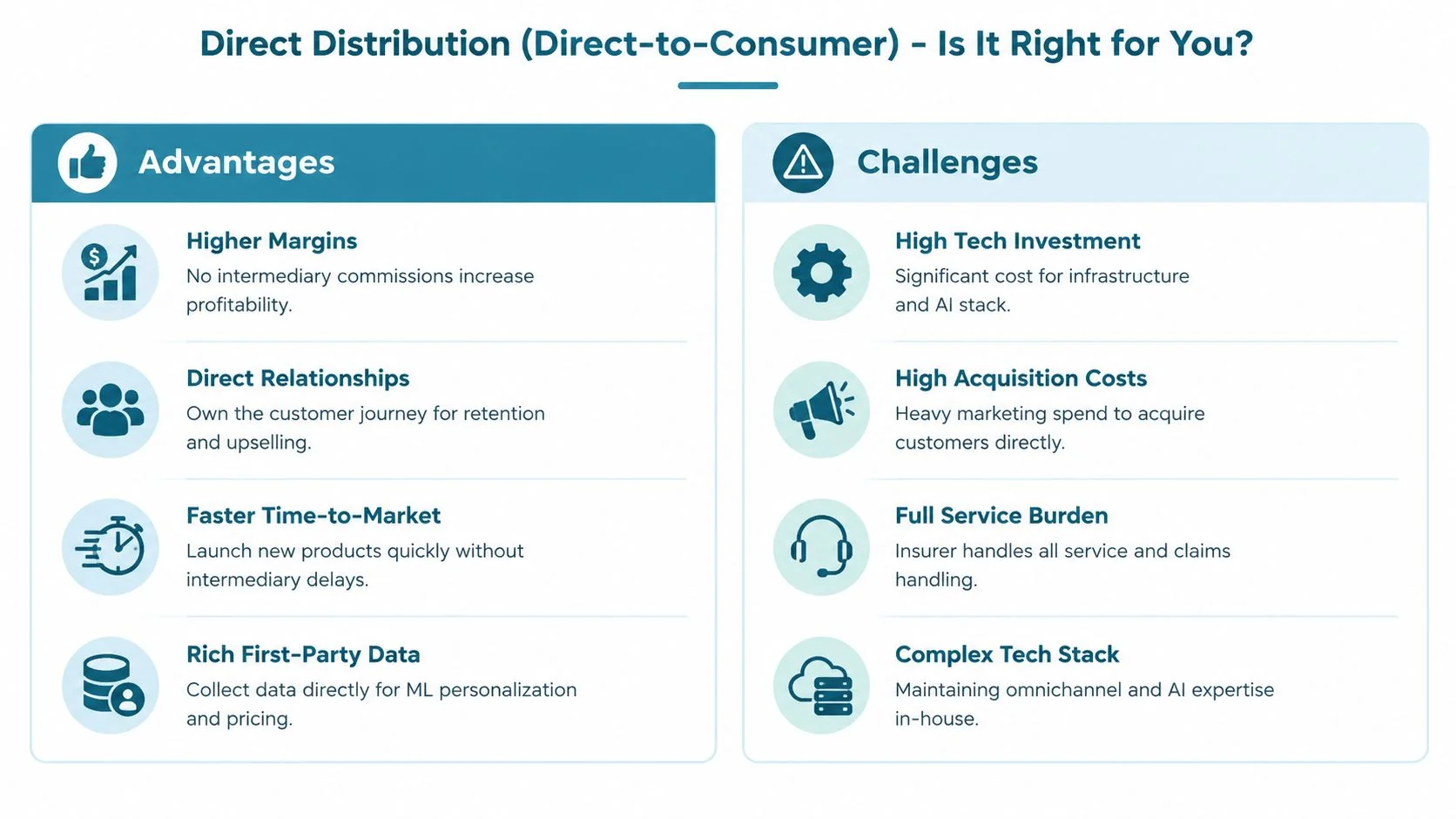
Direct distribution removes the intermediary from the sale. The insurer owns the website, mobile app, call center, or branch experience, and controls the customer journey from quote request through renewal and service. That control can improve consistency and create a direct stream of behavioral data, but it also places the full burden of customer acquisition and advice on the carrier.
Digital direct channels work best when customers can understand and purchase coverage without extensive consultation. Personal auto, travel, device protection, and other relatively standardized products are easier to present through guided journeys than complex commercial or life products. A direct model can support instant quoting, automated underwriting, chatbot assistance, and digital claims intake, but those capabilities only create value when the underlying data and rules are reliable.
Digital acquisition is already a major route to purchase. One benchmark reports that 47% of policy purchases occur through digital channels, compared with 35% through traditional agent channels and 17% through call centers (CX Pilots' 2026 insurance digital experience benchmark). The same source reports that 62% of personal auto policies and 55% of homeowners policies are initiated online, while life insurance reaches 31%, reflecting the effect of product complexity on digital conversion.
Where AI creates leverage
AI can prefill applications, answer coverage questions, identify missing information, and route complex cases to human specialists. Predictive models can prioritize prospects, while computer vision can help organize damage evidence during claims intake. The insurer should still maintain clear escalation paths, especially when customers need advice or when automated decisions could create unfair outcomes.
Practical rule: Use AI to remove friction from a direct journey before using it to automate a consequential decision.
A direct channel's strategic advantage is control, not guaranteed low cost. Track quote-to-bind conversion, service contacts per policy, time to quote, renewal behavior, complaint patterns, and the quality of data captured at each step. A documented example of digital transformation is available in Allianz Direct's AI-powered platform implementation.
2. Insurance Agents and Brokers
Agents and brokers remain central because insurance often requires interpretation, negotiation, and risk judgment. Independent intermediaries can compare products, explain exclusions, assemble complex submissions, and manage ongoing service. Their reach comes through relationships rather than only through search traffic or advertising, and that relationship can support retention when customers face a claim or renewal decision.
The economics are less simple than a direct model. The insurer may pay commission or revenue share, yet the intermediary can lower the carrier's burden for prospecting, needs discovery, documentation, and account management. Brokers also aggregate demand and may influence insurer selection, particularly in commercial markets where risk information is incomplete and coverage terms vary.
The U.S. property and casualty market illustrates why agent-assist technology deserves priority. The independent agency channel placed 62.1% of written premium in 2025, including 87.7% of commercial lines and 39.5% of personal lines, according to Insurance Journal's 2026 report. The report also describes the channel as structurally resilient, making replacement a weaker strategy than improving submission intake, comparative quoting, and account servicing.
The AI-ready intermediary workflow
Carriers can give agents predictive lead scoring, automated data extraction, real-time appetite checks, and natural-language summaries of customer interactions. A broker-facing model should surface reasoning, source fields, and confidence rather than produce an unexplained recommendation. Agency-management-system integrations matter as much as model sophistication because an accurate tool that forces duplicate entry won't gain adoption.
Useful deployment priorities include:
- Submission intake: Extract structured fields from emails, forms, schedules, and supporting documents.
- Appetite matching: Flag markets and products that fit the submitted risk before a producer spends time quoting.
- Service automation: Draft policy-change responses, renewal summaries, and documentation requests for human approval.
- Compliance support: Identify missing disclosures, inconsistent records, and approval requirements.
Measure producer time saved, submission completeness, quote turnaround, bind conversion, service workload, and retention by segment. AI should make the intermediary more capable, not make the customer relationship less accountable.

3. Digital Aggregators and Comparison Platforms
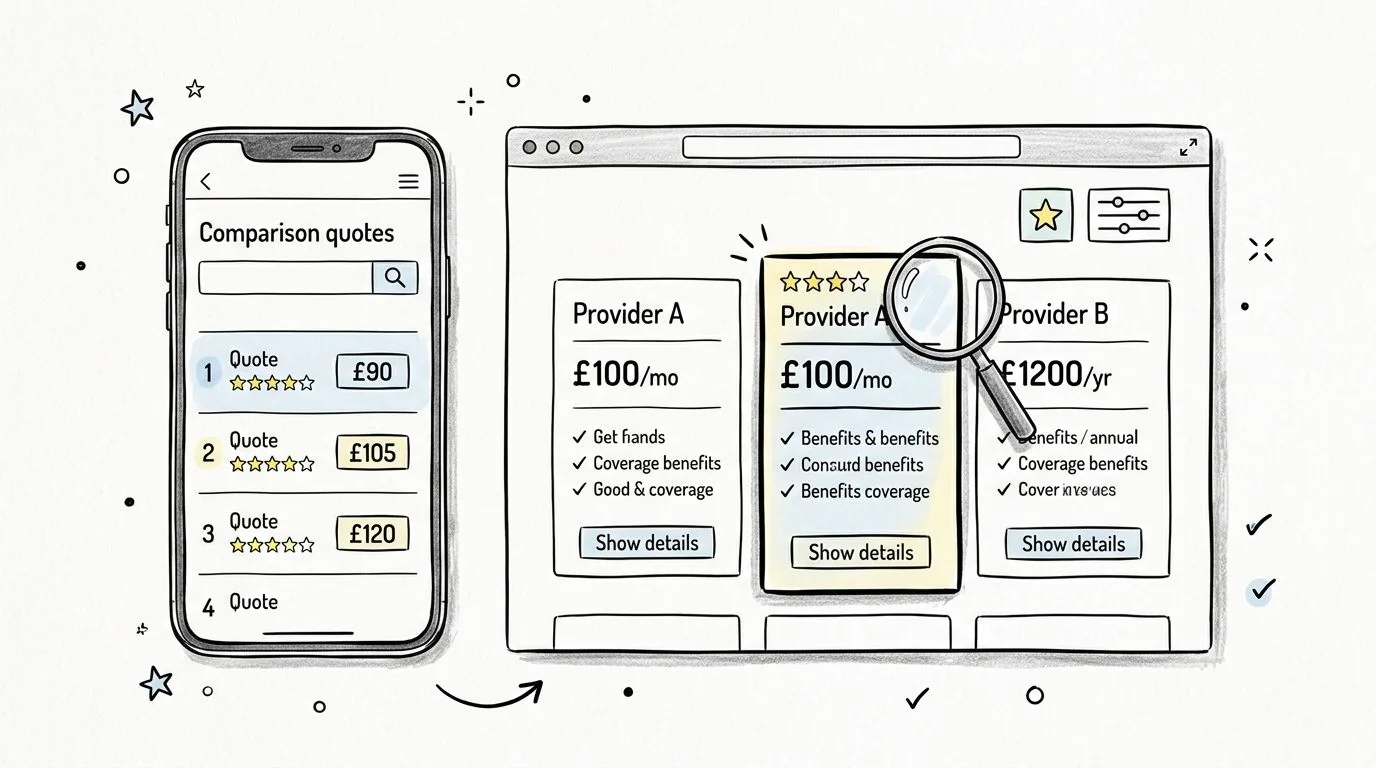
Comparison platforms compete primarily on customer access and shopping efficiency. They collect customer information once, present multiple options, and route quote requests to participating insurers. That can broaden reach for smaller carriers, but it also places pricing, ranking, and user experience partly outside the insurer's direct control.
The acquisition economics depend on lead quality and commercial terms. A platform may deliver high-intent shoppers, but those shoppers can compare primarily on price when the interface gives limited space to service quality, exclusions, claims reputation, or financial strength. The insurer also needs to understand whether it receives a reusable customer relationship or a transaction-level opportunity.
Data quality is mixed. Aggregators may capture structured application inputs and behavioral signals such as which products customers compare, where they abandon, and how they respond to price changes. However, the carrier may not receive the full context, and data definitions can differ across platform integrations. That makes governance and reconciliation essential.
Ranking is a distribution decision
Machine learning can rank offers by price, eligibility, customer preferences, or predicted conversion. Those objectives aren't interchangeable. A ranking model optimized only for conversion may favor products or customers in ways that conflict with fair treatment, suitability, or long-term retention.
Insurers should define the platform's role before connecting the model. If the goal is efficient acquisition, test lead quality and bind rate. If the goal is customer choice, monitor whether recommendations remain explainable and whether important coverage differences are visible.
A comparison engine can increase access while weakening differentiation. The insurer needs a plan for both outcomes.
Practical AI applications include automated quote-data validation, natural-language analysis of customer questions, real-time carrier feed monitoring, and image assessment for eligible auto claims. Track quote-to-bind conversion, cost per bound policy, referral quality, abandonment, complaint volume, and renewal performance. The platform should be judged as a customer-acquisition partner, not merely as a source of traffic.
4. InsurTech Platforms and Marketplaces
InsurTech platforms make distribution part of the operating model. They can provide digital onboarding, modular policy administration, automated underwriting, claims workflows, or marketplace access to a defined customer segment. Their advantage is concentrated execution: insurers can launch a journey without building every component themselves.
Evaluate the channel through seven questions: reach, control, acquisition economics, data quality, conversion, retention, and AI readiness. Reach may grow quickly when the platform already serves a relevant ecosystem. Acquisition costs can fall through shared infrastructure, yet platform fees, integration work, and dependence on another party may reduce the economic benefit. Conversion data can be precise at the point of quote, while retention signals remain incomplete if the platform owns later interactions.
Control is divided. The insurer usually retains underwriting appetite and claims obligations. The platform may control interface design, partner access, and part of the data flow. That division affects branding, customer ownership, service responsibility, and exit rights. It also determines whether the insurer can act on declining conversion or renewal performance without waiting for a partner.
AI readiness is often high because these systems use APIs, event streams, and structured workflows. Readiness does not establish reliability. Models require validated inputs, monitoring, human review, and assigned accountability when eligibility, recommendation, or claims decisions fail.
Set the operating boundary before signing:
- Product design: Who changes coverage, eligibility, and pricing rules?
- Customer support: Who answers questions and manages escalations?
- Claims: Who receives evidence, assesses loss, and communicates outcomes?
- Data: Who may use interaction, transaction, and claims data for future models?
- Continuity: What happens if the platform changes, fails, or exits the market?
Useful AI applications include document extraction, risk-based pricing, claims triage, and multilingual support. Generative AI can assist service within approved knowledge boundaries, with material interactions logged. Insurers can use a guide to digital insurance platforms to frame architecture and implementation questions.
The strongest role for this channel is selective. Use it where reach and speed outweigh dependency risk, while retaining governance over data, decisions, and customer outcomes.
5. Workplace and Affinity Group Distribution
Workplace and affinity distribution can reduce acquisition friction by placing insurance inside an existing relationship. Employers, professional associations, alumni groups, and membership organizations give insurers access to defined populations during education, enrollment, and renewal. Sponsors receive a benefits or member-service offering without building the insurance capability themselves.
Reach is concentrated and efficient, while insurer control remains indirect. Employees and members may associate the product with the group rather than the carrier. That can support initial conversion, but retention may change when an employer revises benefits, a membership organization changes priorities, or another offering replaces the coverage.
The economics depend on more than audience size. Sponsors can lower acquisition costs and improve trust, yet they also add coordination, governance, and continuity risks. Data quality varies with consent, integration, and sponsor systems. HRIS connections can supply eligibility and enrollment records, but personalization must stay within the permission granted. Recommendations should rely on stated needs and coverage objectives, not unsupported assumptions about sensitive circumstances.
Use AI to improve choice, not pressure enrollment
Natural-language assistants can answer enrollment questions and explain policy terms in plain language. Machine learning can compare plans using declared preferences, household needs, and coverage objectives. Predictive analytics can show where employees need clearer education, rather than targeting people who appear easiest to sell.
A practical rollout can focus on five decisions:
- Enrollment guidance: Present coverage and cost trade-offs in clear language.
- Eligibility validation: Reconcile sponsor records with policy applications.
- Document processing: Extract and verify benefits documentation.
- Service routing: Send complex questions to licensed representatives.
- Population analysis: Find confusing steps and recurring data corrections.
Measure enrollment completion, attachment, service contacts, sponsor satisfaction, retention, lapse behavior, and correction rates. AI readiness is strongest when consent records, eligibility data, audit logs, and human escalation paths are established before automation expands.
The channel works best as part of a portfolio. Use workplace access for reach and education, retain direct service capability for control, and test whether better explanations improve conversion and retention without increasing pressure or sponsor dependency.
6. Bank and Financial Institution Channels
Banks and financial institutions possess an established customer relationship, authenticated digital access, and information about financial products. Insurance can appear as a complementary offer inside banking, credit union, or wealth-management journeys. This creates strong contextual reach, especially when a customer is financing a home, managing dependents, or planning retirement.
The channel's acquisition economics can benefit from existing traffic and relationship infrastructure. It also introduces brand and compliance risk. A customer may interpret an in-app recommendation as advice, an endorsement, or a condition of receiving another financial service. The insurer and institution must define suitability, disclosures, permissions, and responsibility for service.
The channel mix has shifted unevenly across markets. In India, agency contribution to premium fell from 54% in FY10 to 32% in FY18, while banks rose from 8% to 10% and direct selling increased from 27% to 43%, according to the Care Ratings distribution-channel analysis. The evidence shows that product design and group business can change channel economics quickly.
Treat banking data as permissioned context
AI can identify relevant moments for education, recommend products based on explicit needs, and prefill information already held with permission. It can also summarize customer conversations and route questions within the banking app. Underwriting models that use financial data require especially clear governance, access controls, and fairness testing.
Start with a narrow journey, such as protection education after a documented financial-planning event. Measure recommendation acceptance, quote-to-bind conversion, complaints, service effort, opt-outs, and retention. The bank supplies context and trust, but the insurer remains accountable for the insurance product and its outcomes.
7. Retail and Point-of-Sale Distribution
Retail insurance reaches customers inside another purchase: travel protection during booking, gap coverage with a vehicle, device protection at checkout, or a product warranty. Its reach comes from transaction timing, while control is often shared with the retailer. That arrangement can reduce acquisition effort, but it also gives the partner influence over presentation, data capture, and post-sale service.
The economic case depends on attachment and retention, not placement alone. Conversion may be strong when the coverage is closely related to the purchase and easy to explain. However, a fast checkout can encourage acceptance without sufficient attention to exclusions, limits, or cancellation terms. Poorly understood coverage can later produce complaints, cancellations, and avoidable service costs.
Transaction data is usually structured. Product, price, location, and timing can support eligibility and pricing, yet those fields rarely describe the customer's full risk or protection need. AI can flag inconsistent inputs, select relevant options, identify unclear wording, and predict where a buyer may need assistance. It should support the decision, not replace disclosures or informed acceptance.
Build controls into the checkout flow
A practical rollout starts with one product and one partner journey:
- Real-time eligibility: Check transaction details against underwriting rules before presenting an offer.
- Coverage explanation: Show relevant exclusions, limits, and cancellation terms before acceptance.
- Conversion analysis: Compare attachment, abandonment, declines, and help requests by journey step.
- Claims intake: Accept structured evidence through the retail or partner application.
- Partner controls: Monitor API failures, pricing mismatches, disclosure errors, and service handoffs.
Track attachment rate, cancellation, claims frequency, service contacts, partner-sourced volume, complaint themes, and retention. AI readiness improves when event definitions and consent records are standardized across partners. Retail distribution creates access at a low-friction moment, but its long-term value depends on informed purchases and reliable ownership after the original transaction ends.
8. Telematics and IoT-Enabled Distribution
Telematics and IoT channels connect insurance with driving, home, health, and other sensor ecosystems. Their strategic value is continuity: consented data can support pricing, prevention, assistance, and parts of the claims process beyond the initial quote or renewal.
Reach depends on device adoption and partner access. Customer experience may remain under the device manufacturer or platform, while the insurer controls the policy and model. Data can be detailed yet uneven because outages, calibration differences, missing observations, and unclear consent weaken decision quality. Acquisition economics also depend on whether partners supply qualified users or merely access to raw signals. Conversion and retention improve only when customers understand the exchange and receive useful services.
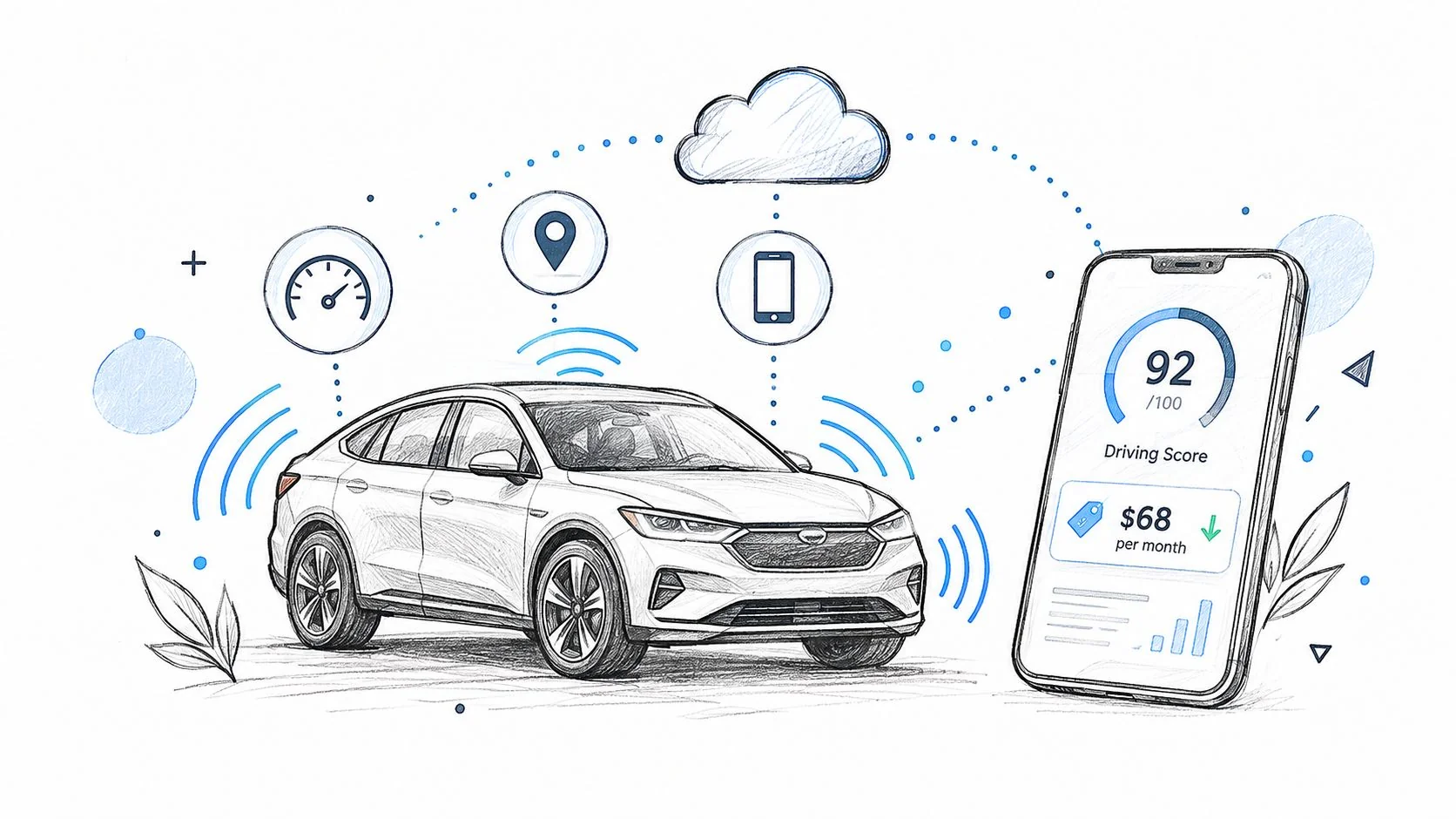
AI can detect patterns linked to driving behavior, environmental conditions, or possible loss events. It can support risk selection and timely interventions, but opaque scoring creates a retention and conduct risk even when the underlying data is accurate. Explain which signals affect pricing or service, and give customers a way to question material outcomes.
Design the channel around measurable controls
Start with a limited use case and test the full customer journey:
- Data visibility: Show recorded signals and their effect on pricing or service.
- Signal-quality rules: Pause or qualify decisions when observations are incomplete or unreliable.
- Prevention prompts: Deliver relevant guidance before a loss occurs.
- Human review: Escalate disputed scores and materially adverse outcomes.
- Partner governance: Define access, retention, security, and incident responsibilities.
A practical review of telematics and IoT applications in insurance can help teams compare use cases and technology choices.
The video below provides visual context for connected insurance journeys.
<iframe width="100%" style="aspect-ratio: 16 / 9;" src="https://www.youtube.com/embed/_jdMeAAm6oo" frameborder="0" allow="autoplay; encrypted-media" allowfullscreen></iframe>Measure consent, data completeness, quote-to-bind conversion, prevention outcomes, disputes, retention, and model drift. Telematics can strengthen risk management and distribution, but customers also experience the insurer as a continuous observer. That makes transparency, data reliability, and partner accountability part of the channel economics, not just compliance tasks.
9. Embedded Insurance and Integration Partnerships
Embedded insurance places coverage inside a non-insurance workflow. Travel booking, lending, commerce, mobility, and property platforms can offer protection at the moment a customer encounters a relevant risk. The partner supplies context and distribution, while the insurer supplies product, underwriting, claims capacity, and regulatory capability.
The customer experience is usually smoother than a separate insurance search. That convenience can expand access to relevant coverage, but it can also make insurance feel invisible. If customers don't understand who provides the policy, what it covers, or how to claim, the partner may gain conversion while the insurer inherits dissatisfaction.
The commercial arrangement needs more than an API connection. It should define lead ownership, revenue share, product governance, disclosures, customer support, data permissions, incident response, and termination. Those decisions affect acquisition economics and long-term retention as much as the model does.
Connect context with responsible automation
AI can infer a likely need from a transaction, select an eligible product, prefill application data, and route claims evidence through the partner interface. The insurer should constrain recommendations to approved products and use real-time rules to prevent unsuitable offers. Compliance disclosures should be generated from governed content, not improvised by a general-purpose model.
Implementation test: If the partner disappeared tomorrow, could the insurer still locate customers, service policies, process claims, and explain every automated decision?
Track partner-sourced volume, attachment rate, conversion, cancellation, claims experience, service cost, data completeness, and API reliability. Embedded distribution isn't direct insurance with a different screen. It's a shared operating model, and both parties must be prepared to manage the customer after purchase.
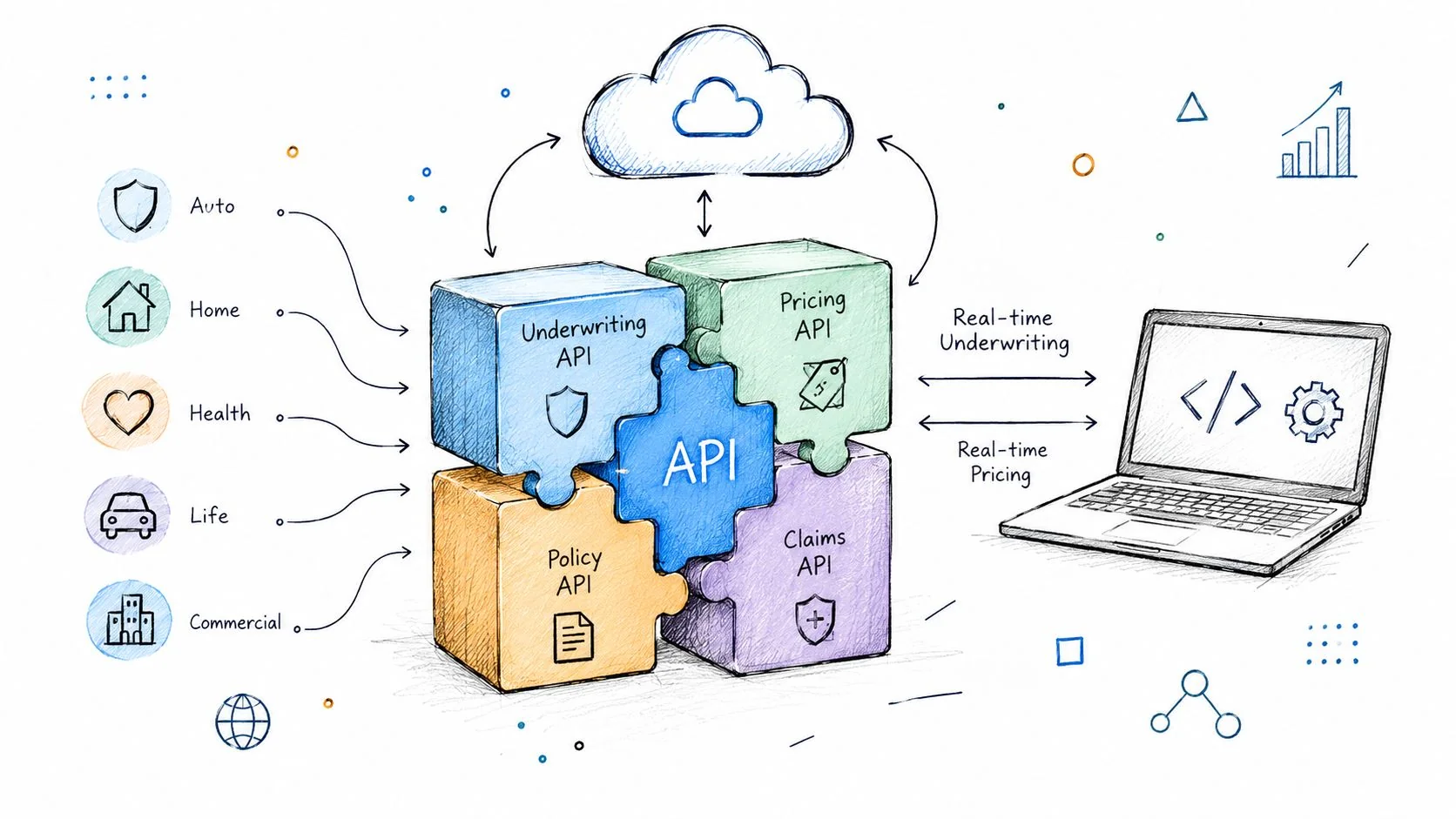
10. API-First and Programmable Insurance Platforms
A partner launches a new insurance journey, but a slow quote response leaves applicants waiting, while an undocumented error prevents applications from completing. One faulty interface can affect banks, retailers, software companies, brokers, and other partners at the same time. That operational risk makes API design a distribution decision, not only an engineering task.
API-first insurance platforms expose quoting, pricing, underwriting, policy administration, and claims through programmable interfaces. Partners can build customer journeys without recreating the insurer's infrastructure. The channel can expand reach and give the insurer control over reusable capabilities, yet acquisition economics depend on partner activation and conversion. Data quality depends on shared schemas, while retention depends on reliable servicing after the initial sale.
AI should run inside governed services. A pricing endpoint can call a validated model, a document API can extract fields for review, and a claims service can classify submissions for triage. Each service needs versioning, observability, security, access control, and a defined fallback when the model cannot decide.
The platform roadmap should connect developer experience with measurable distribution outcomes:
- Clear contracts: Document inputs, outputs, validation rules, and failure conditions.
- SDKs and testing: Provide stable tools, examples, sandbox access, and test data.
- Performance monitoring: Track latency, availability, errors, and unusual traffic.
- Model governance: Record model versions, decision reasons, approvals, and review outcomes.
- Partner controls: Apply permissions, rate limits, audit logs, and data-retention rules.
Compare API latency and reliability with quote-to-bind conversion, partner activation time, policy servicing cost, and model quality. A programmable platform is ready to scale when it performs consistently across partner journeys and gives insurers enough data to improve reach, conversion, retention, and AI decisions.
Comparison of 10 Insurance Distribution Channels
| Channel | Implementation complexity | Resource requirements | Expected outcomes | Ideal use cases | Key advantages |
|---|---|---|---|---|---|
| Direct Distribution (Direct-to-Consumer) | High, omnichannel tech stack, AI, underwriting automation | High, platform engineering, AI/data science, marketing spend | Higher margins, direct customer data, faster product launches | Retail personal lines, digital-first brands | Full control of CX, first‑party data, real‑time pricing |
| Insurance Agents and Brokers | Moderate, CRM/agent portals and integrations | Medium, commission budgets, agent support tools, training | Broad reach, personalized sales, good for complex risks | Commercial lines, niche products, relationship-driven sales | Personal advice, trust, access to specialized markets |
| Digital Aggregators & Comparison Platforms | Moderate, multi‑carrier integrations and ranking engines | Medium, API integrations, lead management, marketing | High lead volume, cost‑efficient acquisition, price transparency | Price‑sensitive consumers, mass-market personal lines | Scale in lead generation, comparative shopping convenience |
| InsurTech Platforms & Marketplaces | High, API‑first, microservices, embedded features | High, R&D, platform ops, regulatory compliance | Rapid innovation, automation, flexible business models | Embedded insurance, B2B2C marketplaces, startups | Modular architecture, fast feature deployment, automation |
| Workplace & Affinity Group Distribution | Moderate, HRIS/payroll and group underwriting integration | Medium, employer contracts, integration work, compliance | Predictable revenues, lower lapse, large batches of customers | Employer benefits, associations, alumni networks | Scale via employers, lower acquisition cost, retention |
| Bank & Financial Institution Channels | Moderate, banking platform integration and compliance | Medium‑High, partnership management, shared systems | Large reach, strong cross‑sell potential, rich financial signals | Bundled financial products, affluent customers | Trusted relationships, financial data for underwriting |
| Retail & Point‑of‑Sale Distribution | Moderate, POS/e‑commerce integrations and instant underwriting | Low‑Medium, retailer partnerships, POS connectors | High attachment rates, impulse purchases, instant issuance | Add‑on coverages at checkout (travel, device, gap) | Convenience, high conversion at point of transaction |
| Telematics & IoT‑Enabled Distribution | Very high, continuous device data, sensor integrations | High, device partnerships, data pipelines, analytics | Granular risk scoring, dynamic pricing, prevention tools | Usage‑based auto, smart‑home, wearable‑linked coverages | Accurate behavioral data, personalized pricing, safety incentives |
| Embedded Insurance & Integration Partnerships | High, seamless API embedding and contextual flows | Medium‑High, partner enablement, maintenance, revenue sharing | Frictionless purchases, high distribution reach via partners | Travel, lending, e‑commerce checkouts, platform flows | Contextual relevance, low CAC through partner ecosystems |
| API‑First & Programmable Insurance Platforms | High, secure, scalable API/microservice platform ops | High, developer docs, SDKs, sandbox, platform maintenance | Enables bespoke distribution, scalable partner ecosystems | Developers, ISVs, platforms building insurance features | Granular APIs, rapid partner innovation, composable services |
Build a Channel Portfolio, Not a Channel Bet
Insurance distribution channels should follow the product and customer journey, not the novelty of the technology. Standardized products may suit direct, retail, comparison, or embedded journeys. Complex commercial risks may need brokers, supported by AI that improves submission quality and producer productivity. Life and health products may combine advice, workplace access, bank relationships, and digital education rather than forcing every customer into self-service.
The market evidence supports this portfolio view. In Europe, a 2023 review reported that bancassurance accounted for 37.5% of life and health distribution, while exclusive agents accounted for 30.0%. For non-life insurance excluding motor, non-exclusive agents held 36.4% and brokers 26.5%. In the UK commercial market, brokers held 83.2% in 2023, with an estimated 83.5% in 2024, according to the distribution analysis summarized in the Thoughtworks insurance report. These differences show why a single global channel playbook will fail.
Use a disciplined sequence:
- Define the target customer and journey. Identify the need, purchase context, complexity, advice requirement, and expected service model.
- Baseline channel economics. Record acquisition cost, commission or revenue share, quote-to-bind conversion, time to quote, service cost, retention, and lapse.
- Map data and integration dependencies. Document consent, data ownership, APIs, agency-management systems, quote engines, partner systems, and claims handoffs.
- Choose one high-value AI use case. Start with a specific constraint, such as submission intake, prefill, eligibility, service routing, or claims triage.
- Pilot with governance controls. Define human review, model monitoring, fairness testing, audit logs, customer disclosures, and an exit path.
- Compare against alternatives. Evaluate the pilot against another channel or a non-AI workflow, not only against its own baseline.
Channel-specific measures reveal trade-offs that a single revenue figure hides. Track quote-to-bind conversion, acquisition cost, commission or revenue share, time to quote, service cost, retention, lapse, partner-sourced volume, attachment rate, API latency, and model quality or fairness indicators. Add qualitative review for complaints, customer understanding, and producer adoption.
AI claims also need evidence discipline. Before approving a vendor or internal business case, validate the implementation context, technology, measured outcome, deployment scope, and limitations. AI for Insurance's case-study database and taxonomy filters can provide a research starting point for comparing documented implementations across underwriting, claims, distribution, technologies, and lines of business.
The practical objective isn't to make every channel autonomous. It's to give each channel the right level of automation while preserving human accountability where advice, fairness, and trust matter. Map your current portfolio, select one journey with measurable friction, and use documented evidence to design the pilot before committing budget or changing distribution strategy.
